
From 2019 Predictions to 2026 Realities: The Evolution of PUBG Esports Through the Lens of Richard Simms
PUBG Global Championship and UK esports evolve as casters like Richard 'TheSimms' Simms adapt to new challenges and the shifting pro scene.
In 2026, when someone watches a nail-biting PUBG Global Championship final, it is easy to forget the careful architecture behind every casting call, every storyline, and every burst of in-game aggression that lights up the screen. Yet, a look back at an interview conducted during the 2019 PUBG Global Championship (PGC) in Oakland reveals just how much the competitive scene has matured—and how many concerns from that era persist today. British caster Richard 'TheSimms' Simms, then a prominent voice for both PUBG and Halo, sat down during the fourth game of the first day of the Grand Finals to share his thoughts on preparation, player mentalities, the structure of professional leagues, and the future of UK esports. Seven years later, this conversation remains a fascinating benchmark against which to measure the health of PUBG esports.
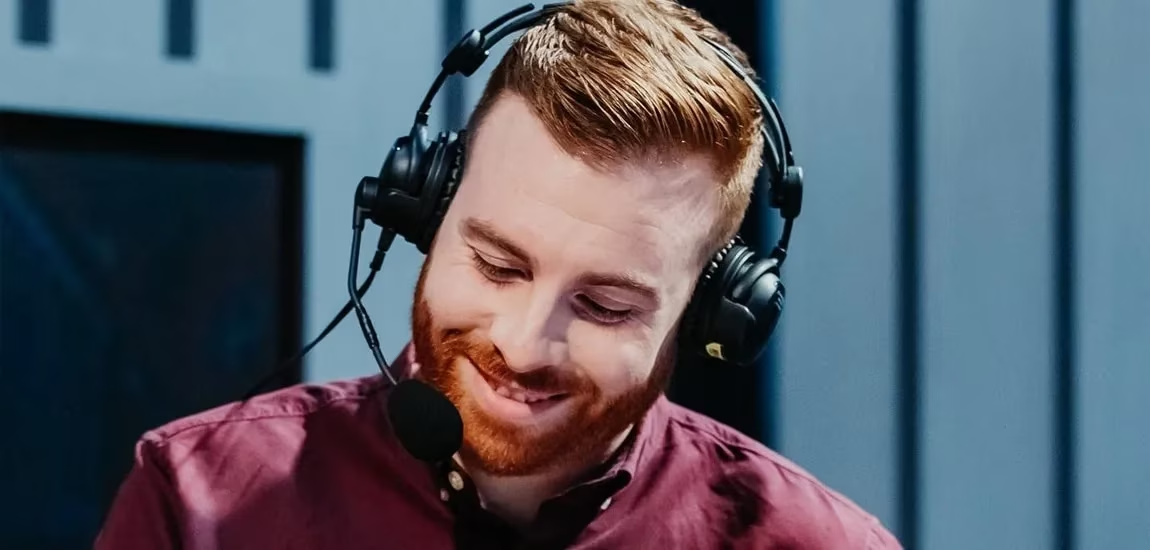
Early in the interview, Simms spoke about the surprisingly smooth scheduling that had allowed him to concentrate fully on PUBG in 2019. "Halo hasn’t really had anything," he said, "so this year the stars have aligned." That balance enabled him to offer a year’s worth of commitment to a single title, a rarity in the nomadic world of esports casting. By 2026, however, the landscape has shifted again. With the Halo Championship Series reborn and multiple esports ecosystems racing for talent, freelance casters rarely enjoy such singular focus. The question now is: has that fragmentation diluted the quality of storytelling, or has it forced broadcasters to become sharper, more adaptable readers of the game?
Preparation, Simms insisted, is an almost entirely digital affair. "Primarily it involves lots of reading, lots of research through Liquipedia, Twitch, YouTube – almost 95% on the computer." He would dip into different Discord servers, hunt for internal team memes, and deconstruct every player’s journey to the event. "If you can dip into internal memes and bring them across," he explained, "that’s a really good way to connect with the audience." That approach has only intensified with time. By 2026, dedicated esports statisticians and integrated data feeds have made player performance metrics almost instantaneous, yet the human touch—understanding banter levels, knowing which newcomer freezes under pressure—still separates a good caster from a great one. How much of that instinct can be automated? The answer, so far, is very little.
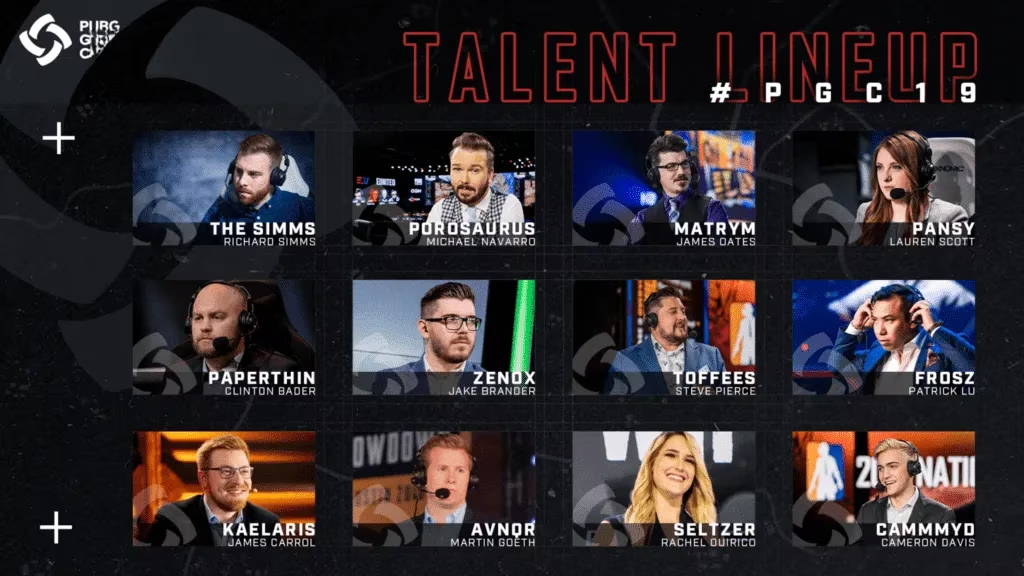
One of the most revealing moments of the 2019 chat came when Simms dissected the TSM lineup of that era. He noted their unusual aggression in a lobby where the prize-pool gap between first ($1 million) and second place ($300,000) was enormous. "Because of that you’d expect a slower pace and a more passive, wary lobby," he said, but TSM’s young core—players like Michael 'mykLe' Wake and Gustavv 'GustavvQQ' Blond—were playing a different game. Their confidence, especially that of then-19-year-old mykLe, impressed him. "Very individual, not scared to talk to anybody," he observed. Fast forward to 2026, and several of those names have become legends or moved into coaching and ownership roles. Aggression has become the hallmark of the modern meta, and many analysts now point to that 2019 TSM squad as an early glimpse of the fearless play style that would later dominate. The lesson, as Simms put it, remains: "Play aggressive, stick to a game plan and don’t get cocky." Gen.G’s eventual victory in that very tournament—something Simms foresaw when he remarked on their monster lead mid-event—proved that disciplined aggression trumps reckless overconfidence every time.
Perhaps the most prescient part of the interview concerned the structure of PUBG’s fledgling pro league. "In my personal opinion, I don’t think PUBG was ready for pro leagues – not within its first year," Simms argued. He believed the rapid jump from an open-circuit to a rigid league system led to player and caster burnout, predictability, and an ecosystem that didn’t nurture all regions equally. "You’ve got all these leagues in place, what do you do next?" he mused. "You have to find a way to make it better and that is an exciting possibility." By 2026, PUBG Corporation has indeed restructured its esports roadmap more than once. The regional leagues have been recalibrated, promotion and relegation systems have been tested, and tournaments like the PUBG Global Series now incorporate more open qualifiers to keep the grassroots alive. Was Simms right? The mixed viewership numbers during the transitional years suggest the early overreach did hurt momentum, but the current, more sustainable model has restored confidence. LATAM, a region he specifically flagged as needing nurturing and maybe even a merger with North America, has blossomed into a fierce contender with world-class rosters that no longer play second fiddle to anyone.
For UK esports, Simms sounded a cautious but optimistic note. He praised initiatives like the ESL UK & Ireland Premiership for giving domestic talent a platform, yet stressed that players could not afford to be lazy. "Make a brand for yourself," he urged, "because when this is done you need something to fall back on." This advice has aged brilliantly. The British scene has produced a string of socially savvy professionals who have translated tournament winnings into content creation empires. The grassroots circuit is busier than ever, but the core message—put in the effort, build your personal brand, and never assume success is a given—echoes in every development bootcamp and post-match debrief. As Simms himself said, "Don’t think a win is a given. Put the time in, put the effort in and work your ass off."
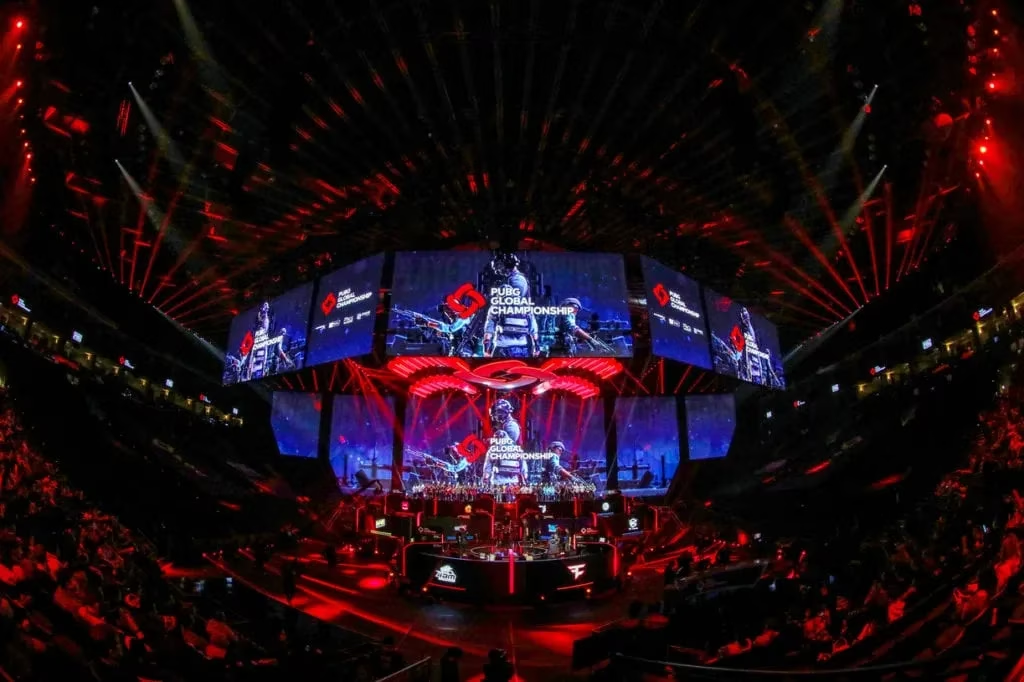
Looking back, the 2019 interview feels both strikingly specific and universally applicable. Simms was right about the dangers of a rushed league structure, right about the power of internal memes and raw confidence, and right that PUBG’s massive casual player base—still pulling well over half a million daily Steam users in 2026—could fuel esports growth if properly engaged. The challenge of cross-pollination between casual and competitive audiences remains an open question. In-game viewing parties, rewarded spectating, and seamless Twitch integration have all made strides, yet the gap persists. What would Simms make of 2026’s scene? Based on his own roadmap, he would likely be encouraged by the corrected trajectory but would still be asking tough questions: are devs nurturing every region? Are players being equipped for life after competition? Is the casting talent deep enough to sustain multiple leagues? The conversation he started at PGC 2019 continues to shape the discourse, and for that reason, rewatching the Grand Finals of that year feels less like nostalgia and more like a blueprint for what esports, when thoughtful, can achieve.