
Nepal Bans PUBG Over Addiction Concerns & Prince Harry's Fortnite Rant in 2026 - The Gaming Debate Rages On!
The 2019 PUBG ban in Nepal, driven by concerns over gaming addiction, and Prince Harry's controversial call to ban Fortnite highlight the enduring debate on video game regulation and its impact on youth.
Yo, what's up gamers and fellow netizens! 👋 Let's dive into a topic that's been getting a lot of heat recently, even in 2026. It's wild to think that several years ago, back in 2019, the whole controversy around battle royale games and their impact really took off. And guess what? The echoes of that debate are still super relevant today! I was just scrolling through some old gaming news archives and stumbled upon this whole saga involving Nepal, PUBG, and even Prince Harry himself. It's a story about government bans, royal opinions, and the never-ending discussion about video games and their effects. So, grab your favorite energy drink, and let's get into it.
The PUBG Ban in Nepal: A Government's Decision
Alright, so picture this: The Himalayan nation of Nepal straight-up banned PlayerUnknown's Battlegrounds (PUBG). I'm talking a full-on government decree! According to reports, the federal investigation authority ordered all internet service providers, mobile operators, and network folks to block the game. And this wasn't some minor suggestion; they made it official. The ban kicked in on a Thursday, and just like that, no more PUBG in Nepal.
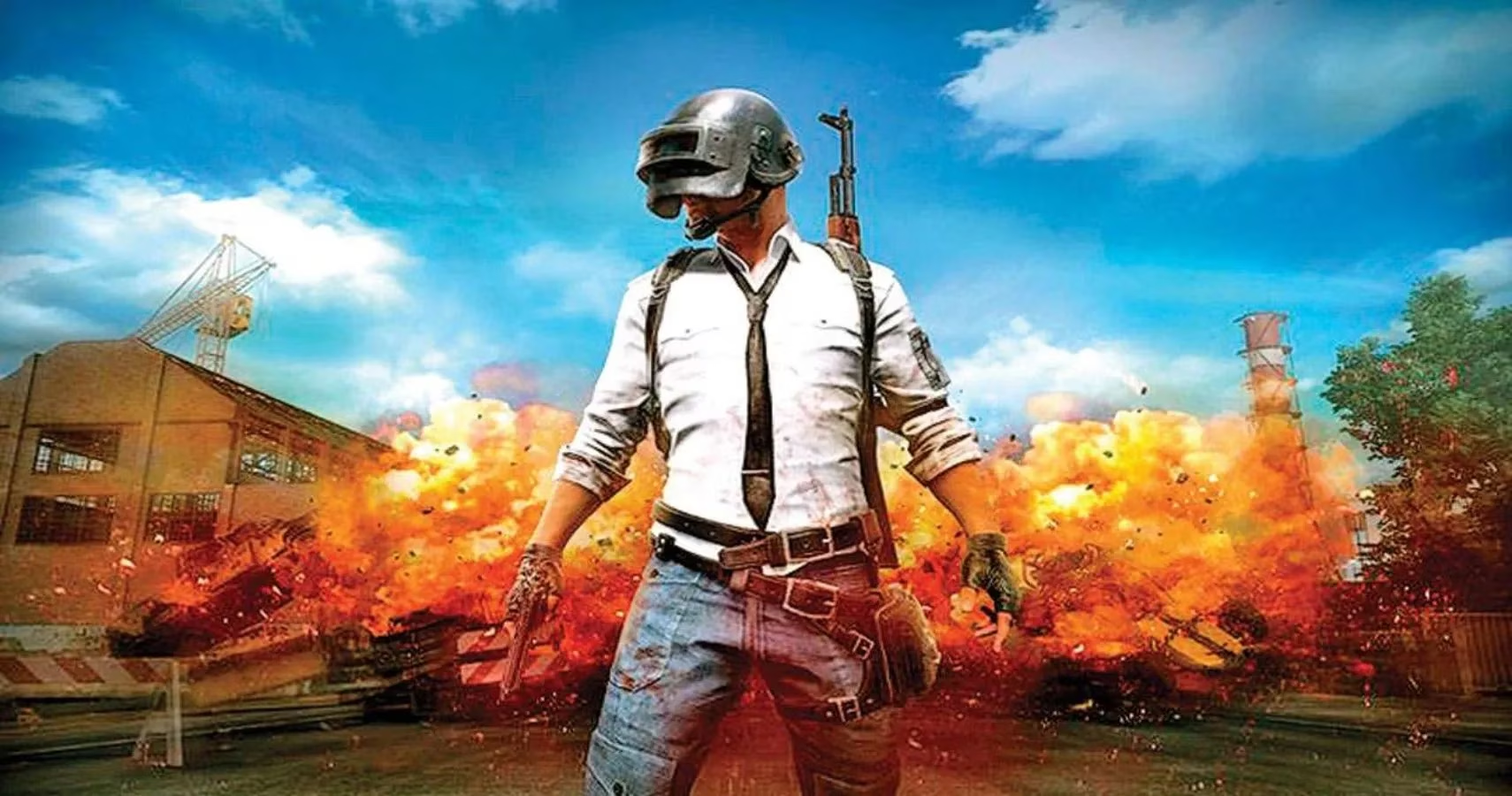
Why the drastic move? The officials gave a pretty clear reason. A deputy director at the Nepal Telecommunications Authority, Sandip Adhikari, straight-up told the press: "We have ordered the ban on PUBG because it is addictive to children and teenagers." He admitted there weren't any specific reports of violence or incidents caused by the game, but the main worry was about kids getting distracted. Parents were apparently concerned that their children were skipping studies, ignoring chores, and just getting hooked on the game. The government even launched an investigation, and their conclusion was that PUBG was becoming a major source of addiction for the local youth. Man, that's some serious government-level concern right there.
Enter Prince Harry: The Royal Rant Against Fortnite
Now, this is where it gets even more interesting. Around the same time, none other than Prince Harry, The Duke of Sussex, dropped his own bombshell. He wasn't talking about PUBG specifically, but about its battle royale cousin, Fortnite. At a YMCA event in London, he went off! He basically called for the game to be banned, saying, "That game shouldn't be allowed. Where is the benefit of having it in your household?" His main argument? He believed the game was designed to be addictive, to keep you glued to the screen for as long as possible. He called it "so irresponsible" and compared the situation to waiting for damage to happen, like kids showing up on doorsteps with broken families.
Prince Harry didn't stop there, fam. He also threw some serious shade at social media, claiming it was "more addictive than alcohol and drugs." Whew, that's a hot take! It's crazy to think a royal was getting this involved in the gaming debate. It really shows how mainstream the conversation had become.
The Bigger Picture: Addiction and Real-World Impact
So, what was the evidence backing up these concerns? Well, Fortnite was also under major scrutiny from medical professionals, especially in the US. Doctors were reporting cases of kids whose lives were being seriously disrupted. One story that went viral was about a young boy who got so frustrated he took a hammer to his parents' car windshield because he thought his gaming device was locked inside. That's next-level rage, man.
Dr. Michael Rich from Boston Children's Hospital painted a grim picture. He talked about kids not sleeping, skipping school, and dropping out of social activities and sports just to play. The term "gaming disorder" was starting to gain real traction. It wasn't just about fun and games anymore; it was becoming a recognized health concern.
Fast Forward to 2026: Where Are We Now?
Okay, let's bring this to the present, 2026. Looking back, those bans and rants were like the opening shots in a much larger cultural war. Today, the conversation has evolved, but the core issues remain.
-
Regulation is Real: Many countries now have more nuanced approaches. Some have implemented play-time limits for minors, while others require stricter age verification. The blanket ban approach, like Nepal's, is less common now, but the debate over government intervention is still live.
-
Industry Response: Game developers and publishers have had to step up. Features like detailed parental controls, play-time reminders, and wellness resources are now standard in most major online games. It's not perfect, but there's definitely more awareness.
-
The Science is In: Research on gaming and its effects has grown a lot. We now understand that for most people, gaming is a healthy hobby. However, for a small minority, it can lead to problematic behavior. The key is education and balance, not just outright fear-mongering.
-
The Legacy of 2019: The Nepal ban and Prince Harry's comments were pivotal moments. They forced everyone—parents, players, developers, and governments—to have a serious conversation about digital wellness. In 2026, we're still having that conversation, but hopefully with more data and less panic.
My Personal Take: Finding the Balance
As someone who's been in the gaming community for years, I've seen both sides. I've had nights where I just wanted "one more match" that turned into five more. I get the appeal, the thrill, the social connection. But I've also seen friends neglect other parts of their lives.
Here's my two cents, for what it's worth:
-
Self-Awareness is Key: Know your limits. If you find yourself skipping meals, losing sleep, or ignoring responsibilities to game, it might be time for a check-in.
-
Communication > Bans: For parents, talking to your kids about healthy habits is way more effective than just taking the console away. Understand what they love about the game.
-
Games Aren't the Boogeyman: Let's not blame the medium itself. It's about how we use it. A book can be a masterpiece or trash; a game can be a fun pastime or an unhealthy obsession.
So, there you have it. A look back at a defining moment in gaming history and its relevance today. It's a complex issue with no easy answers. What do you think? Are government bans ever justified? How do you manage your own screen time in 2026? Drop your thoughts in the comments below! Let's keep the conversation going, but keep it respectful. GG, everyone! 🎮✌️