
PGI.S Revisited: A 2026 Couch Potato's Love Letter to Hybrid Esports
PGI.S, the PUBG GLOBAL INVITATIONAL.S, redefined esports fairness with a bold LAN/online hybrid during the pandemic.
From my 2026 couch, where my snacks are organized by salt-to-crunch ratio, I still think PGI.S was one of the weirdest and most fascinating esports experiments of the decade. I am not an analyst, a coach, or a person who can reliably pronounce every team acronym. I am just an ordinary player who watched a global tournament try to be fair while the world was doing its best impression of a fire drill. And honestly? I respect the attempt.
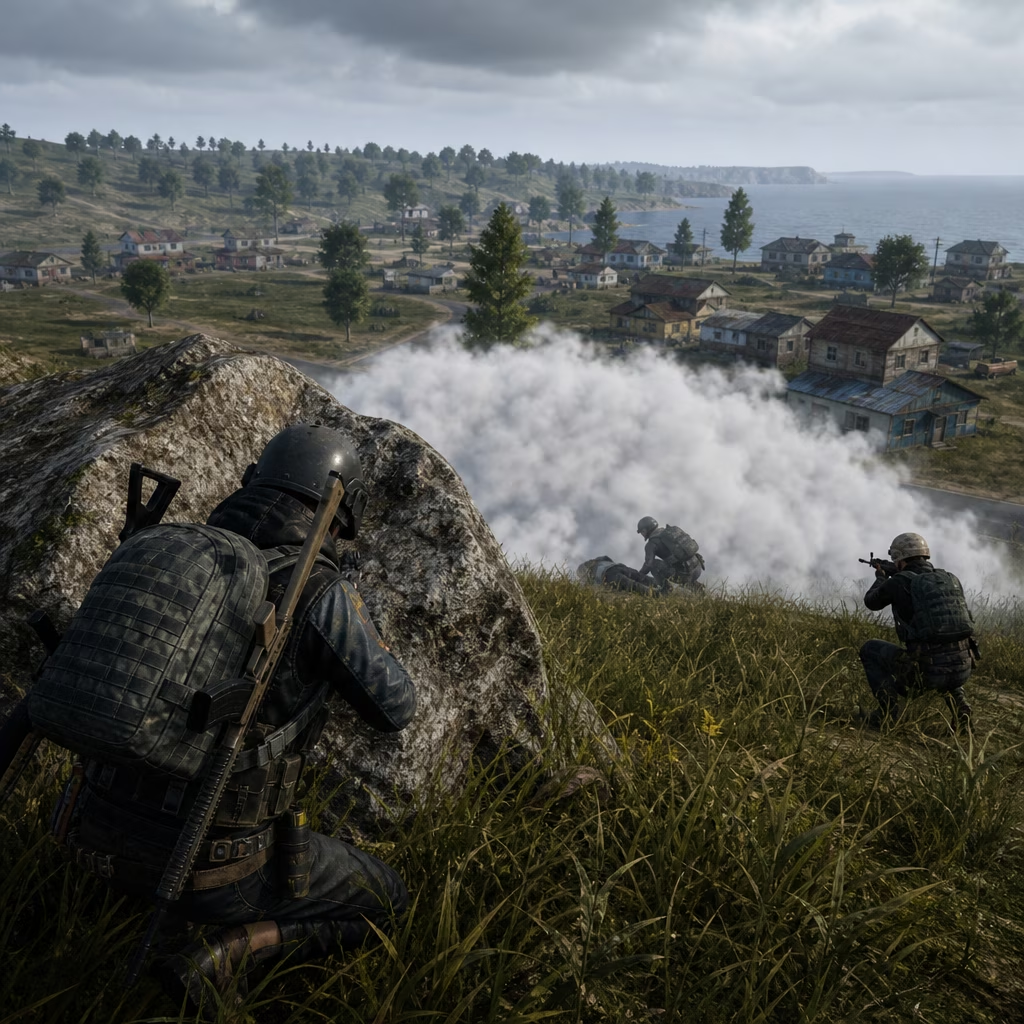
Back then, the PUBG GLOBAL INVITATIONAL.S was promised to be the biggest tournament to date. Teams from around the world had already started making their way to Korea for a tournament starting on February 8. Some invited teams posted about their arrivals, which was helpful, because 'we will figure it out' is not a tournament format; it is a group project with a deadline and too much caffeine. Organizers wanted to give clarity on how the event would actually work, and I appreciated that clarity even from my very ordinary player chair.
The core problem was simple and horrible: running a global tournament during a widespread pandemic. The first goal was everyone's safety. The second goal, close behind, was maintaining a fair and competitive play environment. So PGI.S became a LAN/online hybrid. Teams outside the tournament region, whose connection would have been less than ideal, were invited to fly in and set up on-site. Teams in regions such as China, Japan, and Chinese Taipei remained in their home region, where the connection to the tournament did not suffer as much as elsewhere. The overall goal was to prevent travel and risk wherever possible while still giving online and offline teams a fair, equal competitive environment.
As a player, this felt like building a three-legged table and then checking every cup on it with a laser level. It is not elegant, but if the cups stay upright, you have to respect the engineering. The plan included enhanced anti-cheat monitoring and preventive discipline, which is the unglamorous plumbing of esports fairness. You cannot just announce fairness into a microphone. You have to install it, test it, and hope the basement stays dry.
Here is the PGI.S hybrid setup in the simplest terms I can manage without accidentally becoming a tournament director:
| Element | What PGI.S did | My 2026 couch reaction |
|---|---|---|
| 🌍 Fly-in teams | Invited to travel to Korea, set up on-site, and compete in the LAN environment | Respect the logistics; I complain when my headset cable is two inches short |
| 🏠 Home-region teams | China, Japan, and Chinese Taipei stayed home because connection did not suffer as much | Sensible, and also a reminder that ping is a personality trait |
| 🛡️ Fairness measures | Enhanced anti-cheat monitoring and preventive discipline | Boring in the best way, like a seatbelt |
| 🧳 Safety plan | Teams followed national quarantine guidelines and stayed in an isolation facility for two weeks before the tournament began | Two weeks of isolation sounds like my average ranked grind, but with better scheduling |
I remember arguing with my squad about whether a hybrid tournament could ever feel completely fair. One friend said it was like hosting a potluck during a hurricane: everyone brings something, but you still need to make sure no one's potato salad gets blown into the neighbor's yard. That is basically esports logistics. You can have the best players, the biggest stage, and the loudest casters, but if the connection stutters or the rules feel lopsided, the whole thing starts to wobble. PGI.S at least admitted the wobble out loud and built support beams around it.
In 2026, hybrid events are much less shocking. We have all watched enough online and offline competitions to accept that the future is sometimes a patchwork quilt stitched with ping, hand sanitizer, and scheduling spreadsheets. But back then, PGI.S felt like watching esports grow a second skeleton and pretend it was normal. The tournament did not pretend the world was fine. It said, more or less: safety first, fairness second, and we will do our best with the mess. That is a very human approach to a very global problem.
Would I have loved a perfect LAN event with every team in one room and zero compromises? Obviously. I also would love my ranked teammates to communicate like they have opposable thumbs. But PGI.S gave us something useful: a reminder that competitive integrity is not a vibe. It is a collection of choices, checks, and uncomfortable compromises. The event started on February 8, and from my couch in 2026, I still tip my imaginary cap to that strange, ambitious hybrid experiment. It was not ideal. It was not simple. But it was a real attempt to keep the biggest PUBG tournament running while keeping people safe, and as an ordinary player, I can appreciate that more than any highlight reel.