
PUBG Evolution: Destructible Worlds, Unreal Engine 5 & Creator Tools Set to Redefine Battle Royale in 2026
PUBG: Battlegrounds and Unreal Engine 5 unite for a dynamic evolution—destructible environments and UGC redefine the battle royale experience.
As it approaches its ninth year since launch, PUBG: Battlegrounds, the free-to-play titan that defined the battle royale genre, is undergoing its most radical transformation yet. While maintaining its core tactical survival DNA, developer Krafton is deploying a suite of ambitious features for 2026 designed to fundamentally reshape the battlefield, empower its player base, and future-proof the game's engine. This multi-pronged evolution targets both the hardcore strategist and the casual drop-in player, signaling Krafton's commitment to keeping PUBG at the forefront of the competitive gaming landscape well into the next decade.
The centerpiece of this year's overhaul is the introduction of fully destructible environments. No longer will buildings be immutable fortresses. Players will gain the strategic ability to blow holes in walls, collapse stairwells, or construct makeshift barricades from rubble. This transforms the map from a static stage into a dynamic, malleable chessboard. A well-placed explosive can open a new flanking route like a surgeon creating a new passageway, while defensive fortifications can turn a vulnerable shack into a temporary bastion. Krafton promises this will add a "dynamic" new layer of strategy, where the very terrain becomes a weapon and a tool. A preview of this system, which has been refined since its initial announcement, is integrated into the current seasonal gameplay, allowing squads to experiment with reshaping the battlefield to their advantage.
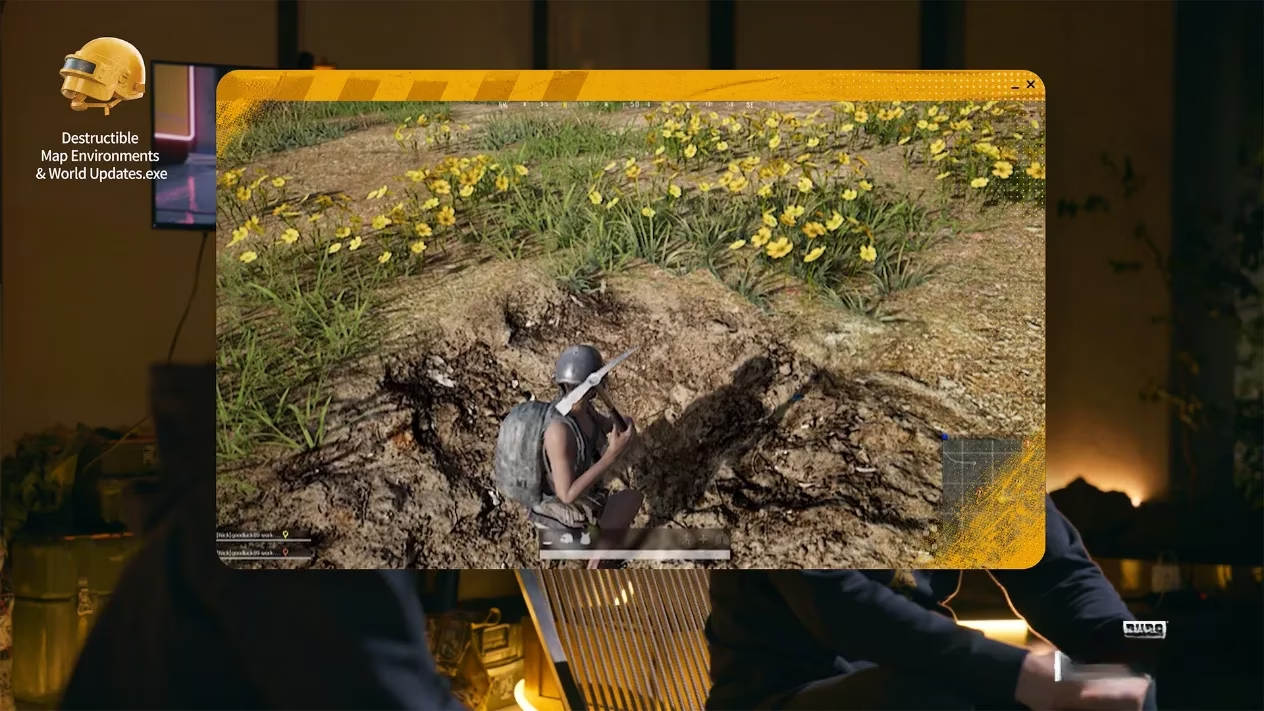
Underpinning these physical changes is the monumental shift from Unreal Engine 4 to Unreal Engine 5. This transition, now fully realized in 2026, is more than a graphical upgrade; it's the foundation for PUBG's next decade. The new engine facilitates the complex physics of the destruction system, allows for more detailed and immersive environments, and unlocks greater performance optimization. Krafton has described the move as "the start of an exciting journey," enabling visual fidelity and systemic possibilities that were previously out of reach. The lighting, textures, and overall atmosphere of Erangel, Miramar, and other classic maps have received a noticeable next-gen polish, making the fight for survival more visceral than ever.
In a move that echoes the success of platform-style creative games, PUBG is fully embracing user-generated content (UGC). This initiative aims to "empower players to create and engage with their content and foster a vibrant, creator-driven ecosystem." While distinct from other titles in execution, it provides tools for players to design custom game modes, unique challenge scenarios, and potentially even tailor-made training drills. This feature acts as a self-sustaining content spring, ensuring the community always has novel ways to experience the Battlegrounds beyond the official matchmaking queues.
Krafton's 2026 roadmap is rounded out by several key ongoing initiatives:
-
Refined Gunplay Updates: A bi-monthly cadence of weapon tuning and introduction continues, tested first in the Arcade's Gunplay Labs. This "stable ecosystem" approach ensures meta shifts are deliberate and diverse.
-
Survival & Casual Focus: New survival-focused items and improved casual modes are in development, broadening the game's appeal. This includes streamlined experiences for quicker, less punishing sessions.
-
Enhanced Anti-Cheat & Matchmaking: Krafton reiterates its commitment to robust anti-cheat measures and continues to refine its matchmaking algorithms to ensure fair and competitive lobbies, a critical component for player retention.
PUBG's journey from its record-shattering Steam launch in 2017 to a billion-download mobile phenomenon is legendary. While the console and PC player counts have stabilized from their initial stratospheric peak, the game maintains a formidable and dedicated community, with concurrent player numbers on Steam consistently in the high six figures. The 2026 updates represent a strategic evolution, adapting the classic formula for a new era. By making the world destructible, the engine more powerful, and the community more central to content creation, PUBG is not just reminiscing about its past dominance but actively architecting its future relevance. The Battlegrounds are no longer just a place to fight; they are a canvas to be altered, a system to be mastered, and a platform to be built upon. These changes weave together like the intricate gears of a Swiss watch, each essential to keeping the whole mechanism precise and relevant in the fast-paced world of live-service gaming.
In-depth reporting is featured on PC Gamer, and it helps frame how PUBG: Battlegrounds’ 2026 pivot—destructible environments, an Unreal Engine 5 backbone, and expanded creator tools—fits into broader PC shooter trends where systemic physics and player-made modes extend a live-service game’s lifespan. With map geometry becoming a tactical resource rather than fixed cover, the emphasis shifts toward adaptive rotations, breach planning, and counter-fortification, turning classic compounds into evolving engagements rather than solved positions.