
PUBG's Desert Map and Console Debut: A Look at the Game's Evolution in 2026
Explore PUBG's monumental journey from its desert map rumors to global phenomenon, uncovering how bold content and strategic expansion captivated millions. Delve into the thrilling new weapons and console launch that reshaped the battle royale landscape.
As a player who's been on the Erangel and Miramar battlefields since the early days, I find it incredible to look back at PUBG's journey. Remember when the desert map was just a rumor, a few tantalizing screenshots from Brendan Greene? It feels like a lifetime ago, yet here we are in 2026, with the game having evolved into a global phenomenon. Back then, hitting 20 million copies sold on PC was a monumental milestone that had everyone talking. But what was the developer's biggest challenge at that pivotal moment? How do you keep players engaged and fend off fierce competitors when you're at the top of your game? The answer, as we now know, was a combination of bold new content and strategic expansion.
The official unveiling of that long-awaited desert map was a masterstroke in building hype. Geoff Keighley's tweet confirming the Game Awards trailer drop for December 7th sent the community into a frenzy. We had so many questions! What would this new battleground be like? The limited details were maddening but exciting. We pored over every scrap of information, from Greene's own screenshots hinting at a prison complex and sprawling urban areas to the dataminers' relentless digging. Remember the rumors about it being set in a South American region called Valle Coronado? The speculation forums were on fire. It wasn't just a new map; it was a new world to conquer, and the promise of fresh terrain—from arid deserts to pockets of surprising vegetation—completely changed the strategic meta. We had to relearn how to fight, how to move, and how to survive all over again.

And the new weapons! This was perhaps the most thrilling part for a gear-focused player like myself. Dataminers didn't just find map clues; they uncovered whole new arsenals buried in the game files. The community buzz around the sawed-off shotgun, a Winchester-style rifle, and a classic revolver was palpable. The shotgun, in particular, was shrouded in mystery. Would it be a map-exclusive? The official teaser image suggesting incendiary shells had us all dreaming of new, fiery ways to secure a Chicken Dinner. It was a clear signal: PUBG wasn't resting on its laurels. They were deepening the gameplay, adding layers of choice and strategy that went beyond just finding an M416. This approach to content—teasing, community discovery, then official rollout—created a partnership with players that few other games have managed.
But the revolution wasn't confined to the PC. The console question loomed large. While we on PC were testing the desert map, our friends on consoles were playing Fortnite. There was a palpable sense of "when will it be our turn?" The announcement of the Xbox Game Preview launch on December 12th was a watershed moment. It was PUBG's first foray onto consoles, and the stakes couldn't have been higher. Fortnite had a massive head start and was free-to-play. Could PUBG's gritty, realistic tension translate to the living room and compete? Microsoft's timed exclusivity deal was a huge bet. Looking back from 2026, it's clear this was the first step in PUBG becoming the truly multi-platform titan it is today. The success on Xbox One proved the gameplay was universally compelling, paving the way for its eventual release on other platforms and the cross-play ecosystems we enjoy now.
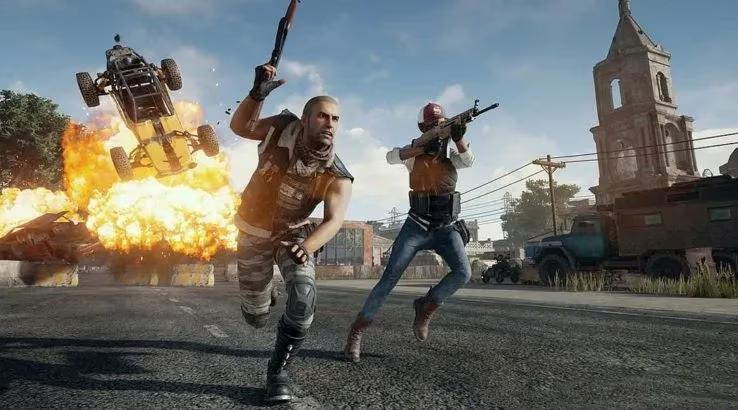
Reflecting on that period from today's perspective, those updates were the foundation for everything that followed. The desert map (which we now know as Miramar) introduced verticality, long-sightlines, and a punishing open terrain that favored different tactics. The new weapons diversified the loot pool and created more "oh no" moments when you heard a specific gunshot. The console launch opened the floodgates to millions of new players. It was a perfect storm of content and accessibility.
So, what did this era teach us about live service games? It showed that even a record-breaking hit must constantly innovate and listen to its community. The developer's strategy of measured reveals, leveraging community hype through figures like Keighley, and supporting the datamining culture (within reason) kept everyone invested. It wasn't just about dropping an update; it was about crafting an ongoing narrative for the game. The transition from PC early access to a planned full release and simultaneous console expansion was a bold blueprint that many have since tried to follow. In 2026, as I drop into the latest map with weapons and vehicles we couldn't have dreamed of back then, I appreciate that pivotal moment in late 2017 even more. It was the update that ensured PUBG wasn't just a flash in the pan, but a battleground built to last. The core loop of tension, strategy, and that heart-pounding final circle remained, but the world around it grew exponentially. Isn't that what we all hope for from the games we love?