
PUBG's Meteoric Rise: From Early Access Phenomenon to Global Gaming Empire
PlayerUnknown's Battlegrounds and PUBG Corp. revolutionized the battle royale genre, achieving explosive global success and esports dominance.
In the ever-evolving landscape of video games, few stories have been as explosive as that of PlayerUnknown's Battlegrounds. By 2026, looking back at its journey from an Early Access title to a cultural behemoth feels like tracing the path of a shooting star. The game's developer, Bluehole, recognized early on that they had a tiger by the tail. To manage this unprecedented global phenomenon, they made a pivotal move: the formation of PUBG Corp., a dedicated subsidiary. This wasn't just corporate reshuffling; it was a declaration of intent. As PUBG Corp. CEO Chang Han Kim, formerly Bluehole's vice president, put it, they needed the "operational efficiency" to support the game on a worldwide scale. The goal was clear: to be "nimble" and seize strategic opportunities, especially in the booming esports arena and in building PUBG into a lasting global intellectual property franchise. Talk about aiming for the stars!
The Birth of a Gaming Juggernaut 🚀
The announcement of PUBG Corp. was more than just a press release; it was the blueprint for a global empire. The newly minted subsidiary immediately set up shop in the United States, with plans to establish offices in Europe and Japan hot on its heels. The mission? To create "more centralized points of contact for players around the world." This was a masterstroke in community management, ensuring that whether you were dropping into Erangel from Seoul, Seattle, or Sheffield, you had a direct line to the developers. It was a move that screamed, "We're here for the long haul."
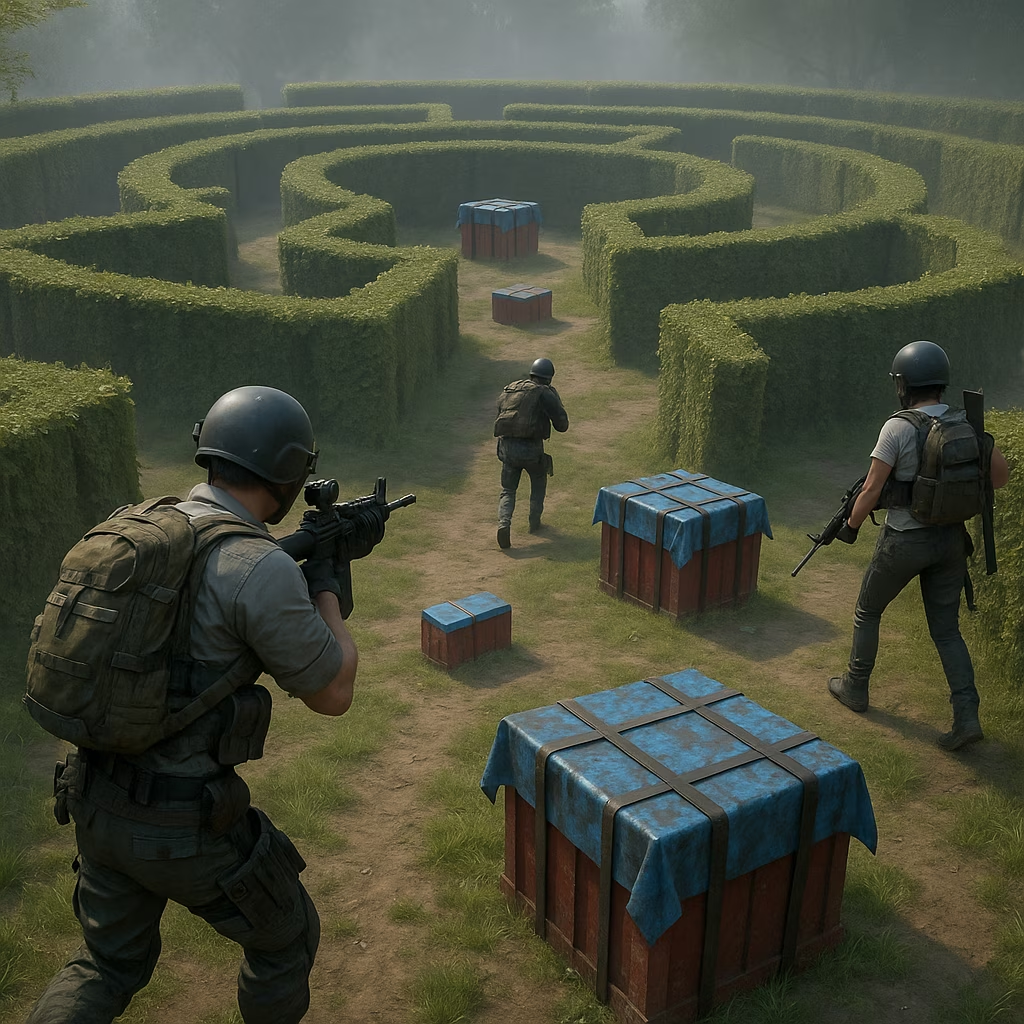
And the numbers? They were absolutely mind-blowing. At the time of the subsidiary's formation, PUBG had already sold a staggering 13 million copies, a leap from 10 million just weeks prior. This wasn't just success; it was a velocity that few in the industry had ever witnessed. The game had also achieved a legendary feat on Steam, dethroning Dota 2 to claim the record for the highest number of concurrent players. The battle royale genre, which PUBG had arguably perfected, was no longer a niche—it was the main event.
Navigating Controversy and Competition ⚔️
Of course, no rise to the top is without its drama. The gaming world is a tough neighborhood, and PUBG found itself in the thick of it. Shortly after the formation of PUBG Corp., the developer publicly expressed it was "concerned" about the similarities seen in Fortnite's newly released Battle Royale mode. This comment came on the heels of a statement from H1Z1 developer Daybreak, who claimed that without their game, "there wouldn’t be a PlayerUnknown’s Battlegrounds." The air was thick with claims of inspiration and imitation, a classic case of "game recognize game" turning into a turf war.
Many industry watchers at the time felt Bluehole's public "shaming" of Fortnite was a terrible PR move. It was a high-stakes gamble in the court of public opinion. In hindsight, this period of controversy was a crucible that tested PUBG Corp.'s strategic mettle. Instead of getting bogged down in endless legal spats, the subsidiary doubled down on what it did best: refining the core PUBG experience and building out its ecosystem.
Building a Legacy: Esports and Beyond 🏆
Fast forward to 2026, and the vision outlined by Chang Han Kim has materialized in spectacular fashion. PUBG Corp.'s focus on esports has paid off in spades. The PUBG Global Championship (PGC) is now a cornerstone of the competitive gaming calendar, with viewership that rivals traditional sports. The game's mechanics—tense, tactical, and deeply rewarding—proved to be a perfect fit for high-stakes competition.
The expansion of PUBG as a "true global IP franchise" has also been a sight to behold. We're not just talking about a video game anymore. The PUBG universe has expanded into:
-
Mobile Domination: PUBG Mobile became a cultural touchstone, bringing the battle royale experience to billions.
-
Animated Series: A critically acclaimed show expanded the lore of the battlegrounds.
-
Merchandising Empire: From high-end collectibles to everyday apparel, the chicken dinner logo is recognized worldwide.
-
Live Service Evolution: The game itself has undergone countless seasons, maps, and collaborations, keeping the experience fresh for a dedicated player base.
The formation of PUBG Corp. was the moment the game graduated from being a sensational hit to a permanent institution. It was the organizational engine that allowed the creative vision to scale globally. They played their cards right, focusing on player connection, competitive integrity, and brand expansion. In the cutthroat world of gaming, that's how you go from a flash in the pan to a forever flame. The story of PUBG is a testament to what happens when explosive creativity meets shrewd, global strategy—a lesson that continues to resonate throughout the industry today.