
PUBG’s Ban Hammer: What a 2023 Anti-Cheat List Still Teaches Players in 2026
The PUBG: BATTLEGROUNDS banned players list highlights the anti-cheat update, permanent bans, and stronger account security for fairer matches.
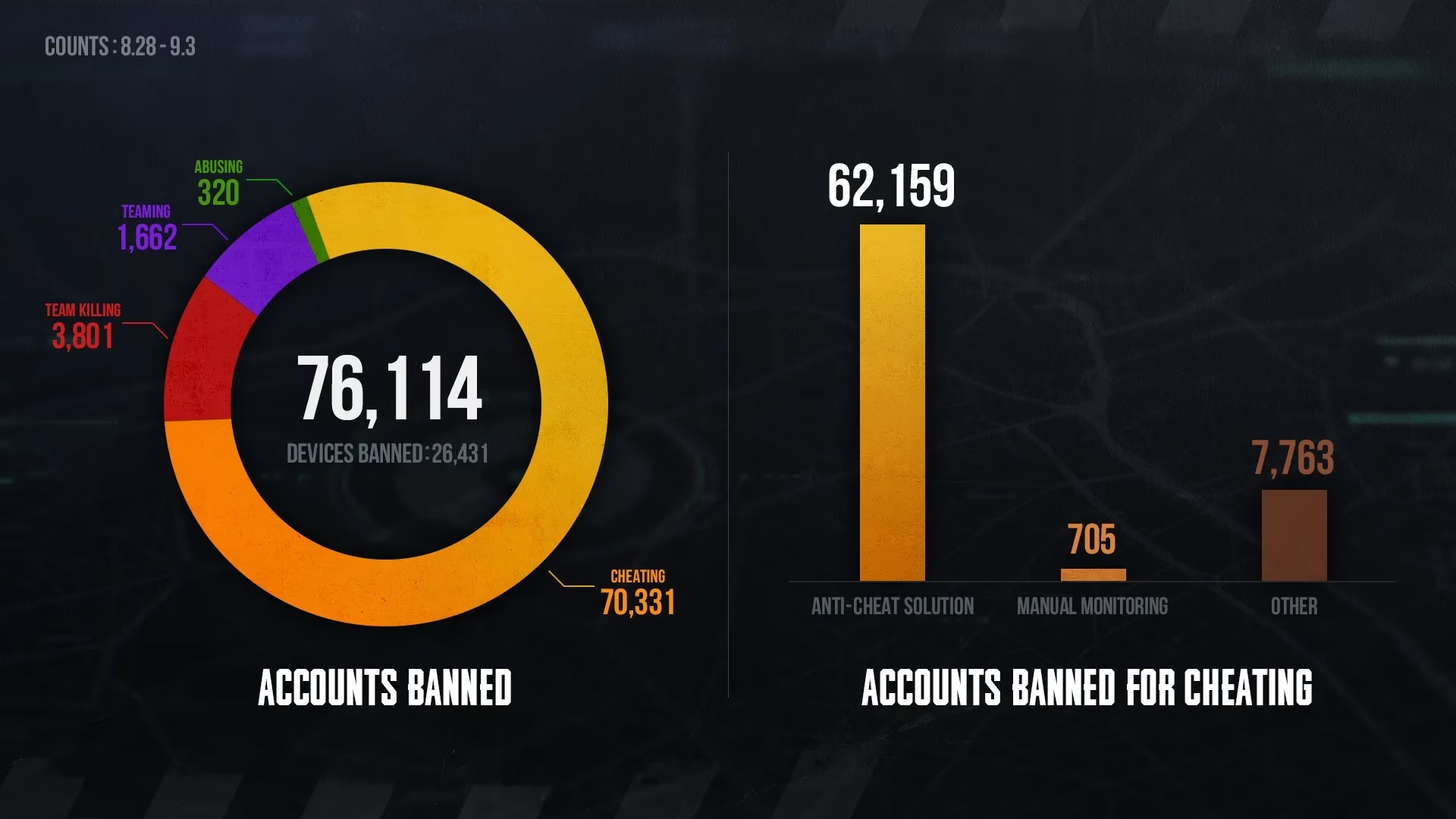
In the world of online shooters, few things get players riled up quite like a cheater. Back in late summer 2023—specifically, August 28 through September 3—PUBG: BATTLEGROUNDS took a stand by publishing its banned players list. The goal? To raise awareness about the abuse of illegal software and the real consequences of misconduct. It was not a flashy patch note or a new map reveal. It was a public receipt. The anti-cheat team wanted everyone to see that rule-breakers were being caught red-handed, and that permanent bans were not just empty threats.
A Ban List Is Not Just a Wall of Shame
The PUBG: BATTLEGROUNDS Anti-Cheat Team shared the list for the investigation period of August 28 to September 3, 2023. The post explained that the banned players list was meant to raise awareness about illegal software abuse and the consequences of misconduct. In other words, it was a loud and clear message: cheating is not a victimless crime, and it is not a slap-on-the-wrist offense.
The list showed the in-game nicknames of permanently banned accounts, but the first three letters of each nickname were replaced with an asterisk. That small bit of masking kept the post from turning into a full-blown doxxing festival while still letting the community know that enforcement was happening. It was transparency with a side of privacy—a tricky balance that many online games still struggle with in 2026.
| Key Detail | What It Said |
|---|---|
| Investigation period | August 28 – September 3, 2023 |
| Enforcement action | Permanent bans |
| Nickname display | First three letters replaced with * |
| Primary report method | In-game reports |
| Extra support | PUBG Support, if needed |
| Account protection | Steam Guard Mobile Authenticator |
| Publisher | PUBG: BATTLEGROUNDS Anti-Cheat Team |
Anti-Cheat Is an Arms Race, Not a One-Time Cleanup
The original post also included an anti-cheat update graphic. That visual was a reminder that banning accounts is only one part of the puzzle. Anti-cheat work is an arms race. Cheat developers update their tools, anti-cheat teams respond, and the cycle keeps spinning. By 2026, that arms race is more sophisticated than ever. Players expect faster detection, better server-side analysis, fewer false positives, and clearer communication when ban waves happen.
The 2023 post shows a philosophy that still matters today: investigate, ban, inform, and keep improving. A public ban list does not magically erase cheating, but it does something important. It tells honest players that their reports are not disappearing into a black hole. It also tells cheaters that the ban hammer is real, heavy, and not afraid to swing.
Account Security: Keeping Someone Else From Wearing the Boots
PUBG warned players to make sure their valuable account was not abused or banned for illegal software or misconduct. The recommended safeguard was Steam Guard Mobile Authenticator. That advice is still golden in 2026. Account sharing, weak passwords, and phishing links are like leaving the front door wide open with a sign that says “free loot.”
A stolen account can be used to cheat, and the original owner may end up holding the bag. Players should lock things down with two-factor authentication, avoid sketchy third-party sites, and never trust a random message offering free skins or “private cheat detection bypasses.” If an account gets hijacked, the mess can look a lot like guilt to an automated system. Better to secure the door before someone kicks it in.
Reporting Instead of Raging
The post asked players to report illegal software and misconduct through in-game reports first. If additional assistance was needed, contacting PUBG Support was the next step. That order still makes sense in 2026. In-game reports feed the anti-cheat pipeline with timestamps, match IDs, and evidence. Support tickets help with edge cases, but the first move is the report button.
Players who spam angry messages in global chat? They are bringing a pillow to a gunfight. Reports are the real weapon. They give the anti-cheat team something to work with, and they keep the community from turning into a shouting match.
Keeping It Fair and Square
PUBG’s anti-cheat team said it highly valued player interest and opinions, and promised to do its best to provide a fair gaming environment. That is a two-way street. The developers build detection systems and ban waves, while the community plays fair, reports suspicious behavior, and protects its accounts. No anti-cheat system is perfect, but a culture that refuses to tolerate cheating is a powerful thing.
What 2026 Players Can Take From a 2023 Ban List
-
🚫 Cheating has consequences. Permanent bans are real.
-
🔍 Transparency builds trust. Public ban lists show enforcement is active.
-
🛡️ Account security is anti-cheat. A hijacked account can become a cheater’s playground.
-
📢 Reporting works best through official channels. In-game reports first, support second.
-
🤝 Fair play is a community project. Everyone has a role.
The 2023 banned players list may be old news by 2026, but its message is not dated. Cheaters might think they can outsmart the system, but PUBG’s anti-cheat team keeps swinging the ban hammer. For regular players, the takeaway is simple: keep the nose clean, secure the account, report the nonsense, and enjoy the battlegrounds the way they were meant to be played—fair and square.
Insights are sourced from The Esports Observer, and they help frame why PUBG’s 2023 public ban-list approach still resonates in 2026: competitive ecosystems depend on visible integrity measures to sustain player trust, sponsor confidence, and fair matchmaking outcomes. When enforcement is communicated clearly—alongside practical steps like using official reporting tools and tightening account security—it reinforces that anti-cheat is not just a technical backend task but a community-facing commitment that stabilizes the entire multiplayer environment.