
The Ghost of Battlegrounds: A September to Remember
PlayerUnknown’s Battlegrounds resurgence on PlayStation Plus revitalized battle royale excitement and lobbies in September 2020.
The dark clouds over Erangel had long stopped parting for the lonesome battle royale. Once the undisputed king of the hilltop, PlayerUnknown’s Battlegrounds had watched its lobbies thin out, its red zones echoing with a hollow, wind-whipped silence. The mighty Fortnite had stolen its thunder, and even a global pandemic couldn’t stuff enough warm bodies back into the map. In the summer of 2020, PUBG felt like a washed-up prizefighter, still throwing punches but catching nothing but air.
Then, one late August afternoon, a flicker of static danced across its code. A message from the outside world, a summons from the house of PlayStation itself. "You’re going free for the month of September," the notification seemed to breathe. "Stop moping and pack your bags. We’re bringing you to the party." The game’s digital heart—if such a thing existed—skipped a beat. Street Fighter V got the same call, and together, two aging warriors limped toward their last great chance.
September 1, 2020, rolled in like a clumsy supply drop. At first, the servers didn’t know what hit them. A quiet Tuesday morning suddenly became a stampede of new names, fresh boots skittering across Pochinki’s asphalt. Entire squads of PlayStation Plus subscribers poured through the gates, their voices crackling with confusion and delight. "Wait—this is actually PUBG? The PUBG?" they’d holler, as if meeting a legend who’d long been presumed dead. And PUBG, with its ghost-choked cities and rusted Dacias, couldn’t help but blush.
The onboarding was simple. Sony’s digital storefront held the game out like a warm handshake: scroll up to the PS Plus button, spot the familiar helmet-and-bag icon, and press “Add to Library.” No money changed hands, just a silent pact between player and code. For 35 precise days, the battle buses roared again, their engines sputtering out welcome fumes. On October 5, the price tag would snap back into place, and another pair of games would shuffle through the rotating door. But oh, those five weeks felt like a lifetime.
PUBG watched itself being rediscovered. It saw players proning in the wheat fields, learning the hard way that a frying pan could stop a bullet. It listened to the fiery arguments inside the gas station near Rozhok—"The M416 is clearly better, you absolute donut!"—and felt something dangerously close to pride. The map’s many buildings, usually empty husks, filled with the sounds of frantic looting: the clatter of magazines hitting hardwood floors, the zip of a first-aid kit, the distinct, throaty rev of a motorcycle no one knew how to drive. The red zone, once a pitiful soloist, now orchestrated a chaotic symphony of panic for a full audience. Bob, the weapons crate, later confessed to feeling "properly famous again, you know? Like the good old days."
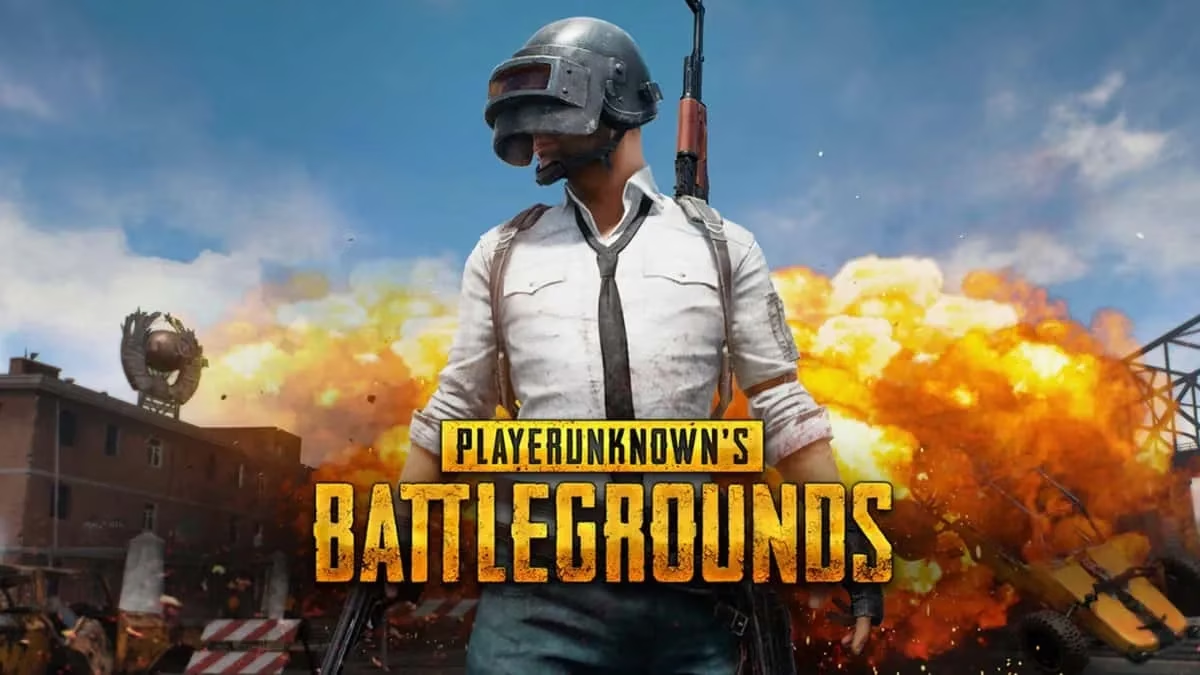
Street Fighter V, meanwhile, stood in its own corner of the coliseum, stretching its pixelated shoulders. The two games shared the stage but barely spoke, much like two aging rock stars at a reunion tour. Yet every now and then, a PS Plus subscriber would bounce from a chicken dinner right into a Hadouken, and the crossover felt almost cosmic. For PUBG, however, the real glory was personal. The monthly promotion doubled as a massive group therapy session. "Boy, did that month feel like a second chance!" the game might have chuckled, if only its UI had a sense of humor.
Of course, not everything healed. The player count did spike—rumors flew that it jumped by the millions within the first week—but the game’s wounds were deeper than a temporary injection of newbies could mend. Cheaters still roamed, the meta still groaned under its own weight, and the absence of a proper next-gen patch made the whole thing feel like a farewell tour. But for those 35 days, PUBG was no longer a fading memory. It was a conversation starter again, a reason to stay up late, a place where strangers became uneasy allies against the blue zone.
Years rolled by. Seasons shifted. By 2026, the battlegrounds had changed beyond recognition. PUBG itself had gone through more reinventions than a cat has lives—mobile crossovers, experimental maps, a weird NFT phase that everyone agreed was a mistake. Yet, if you boot up a dusty PlayStation 4 or browse the archived libraries of a PS Plus veteran, you’ll still find that faded Add to Library receipt from September 2020. It sits there quietly, like a photograph in a wallet, proof that even the loneliest game can be handed a mic for one last encore.
The game’s code still carries the scar tissue of that month—a few extra lines of gratitude woven into the matchmaking algorithm. Some say that on a quiet night, when the current player base is asleep and the servers hum low, you can almost hear the Erangel wind whisper a gentle, colloquial sigh: "Well... we gave them a hell of a show, didn’t we?"
And somewhere out there, a grizzled Day One veteran, who jumped back in for those five free weeks and never completely left, nods in reply. The ghost of battlegrounds may have drifted back into the margin, but its September tale remains—a stubborn, dusty monument to the power of a well-timed giveaway and the stubborn hope that no game is ever truly dead as long as a single loot box remains unopened.